
Common Orthodontic Problems in Northbrook, IL
A bad bite, known clinically as malocclusion, is far more common than a naturally perfect one. It can make chewing harder, make teeth more difficult to keep clean, wear enamel unevenly, affect speech, and affect how people feel about their own smile. Drs. Kyint and Evan Chwa treat all of the conditions below at our Northbrook office, for children, teens and adults.
Bite problems are inherited more often than not. They can also develop from thumb sucking, prolonged pacifier use, early loss of baby teeth, dental disease, an injury, or differences present from birth. Knowing which one you or your child has is the first step, and the point of an evaluation is to name it precisely rather than approximately.
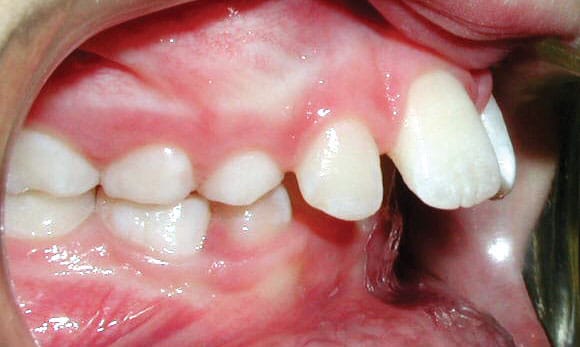
Upper Front Teeth Protrusion
The upper front teeth extend too far forward, or the lower teeth do not come forward enough. Besides the appearance, protruding front teeth are considerably more vulnerable to being chipped or knocked out in a fall or a collision, which is why we treat this as a functional problem rather than a cosmetic one.
You may also hear the term overjet, which is the horizontal gap between the upper and lower front teeth. Overjet is not the same as overbite, which is vertical overlap. Many patients have some of both.
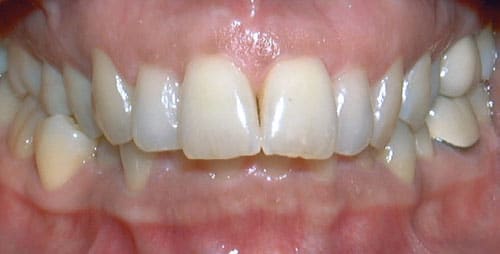
Overbite
The upper front teeth overlap the lower front teeth excessively. In a deep overbite the lower teeth can bite into the roof of the mouth. Severe overbites cause uneven wear on specific teeth and can contribute to jaw discomfort over time.
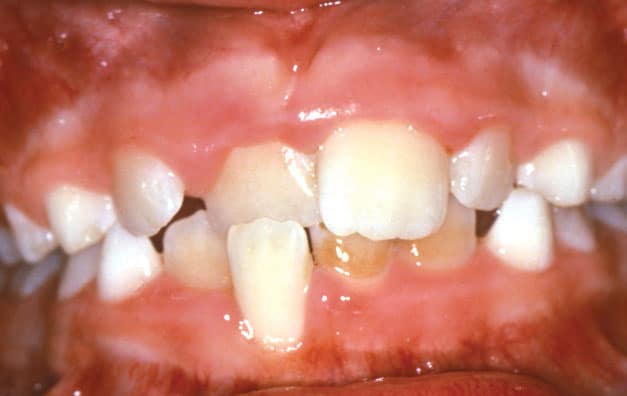
Crossbite
One or more upper teeth sit inside the lower teeth rather than outside them. A crossbite often makes the lower jaw shift to one side to find a comfortable bite, and in a growing child that shift can affect how the jaw develops. It also produces uneven wear. This is one of the conditions where early correction genuinely changes the outcome.
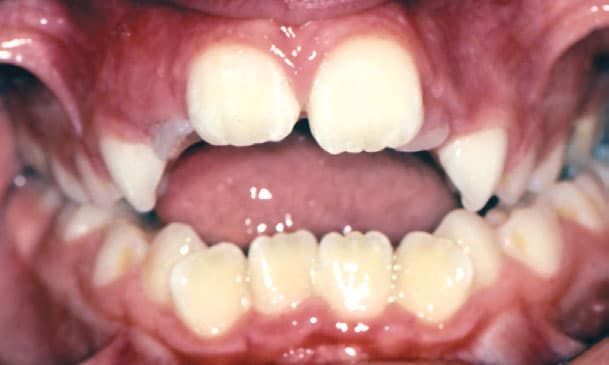
Open Bite
The upper and lower front teeth do not meet when the back teeth are closed, leaving a gap. Chewing becomes noticeably harder, since the front teeth cannot do their job. Open bites are frequently linked to tongue thrusting or thumb sucking, and speech is often affected too.
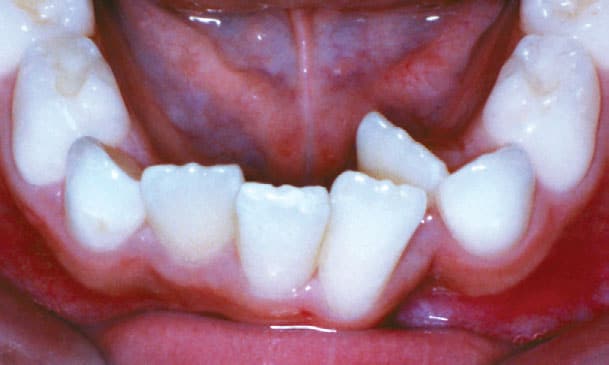
Crowding
There is not enough room in the arch for all the teeth, so they overlap, rotate or get blocked out of position entirely. Crowding is the most common reason people seek orthodontic treatment. It also makes brushing and flossing genuinely difficult, which raises the risk of decay and gum problems in exactly the places that are hardest to reach. In many cases the arch can be expanded rather than teeth removed, particularly when the problem is caught while a child is still growing.
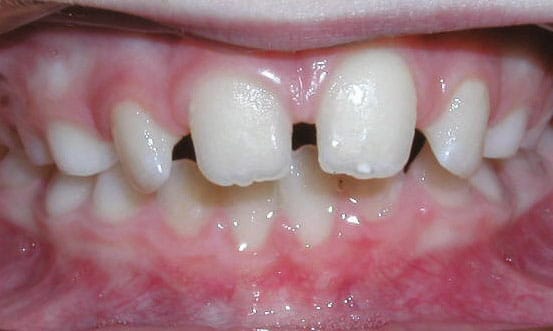
Spacing
Gaps between the teeth, either because teeth are missing, because they are small relative to the jaw, or simply because that is how they came in. Spacing is often a cosmetic concern rather than a functional one, though larger gaps can allow food to pack against the gums.
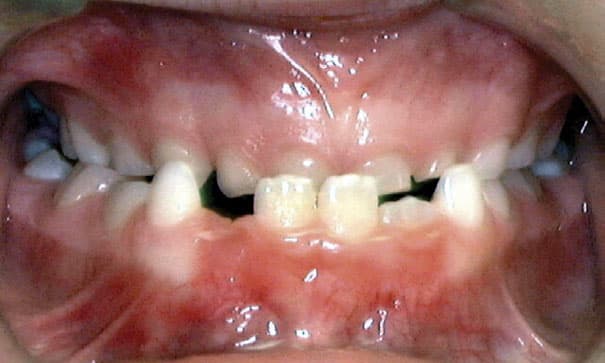
Underbite
The lower jaw sits forward of the upper jaw, so the lower front teeth close in front of the upper ones. Underbites can make chewing and speaking harder, and because they are usually skeletal rather than dental, they are among the conditions most worth catching early. In a growing child, the jaw relationship can often be guided. Once growth is finished, correcting a significant underbite may require coordination with an oral surgeon.
How Are These Corrected?
Nearly all of them respond to braces or clear aligners, often alongside an appliance such as an expander or a functional appliance where the jaw relationship needs work.
What varies is the timing. Crowding and spacing can usually be treated whenever the patient is ready. Crossbites, underbites and significant jaw discrepancies are much easier to address while a child is still growing, which is the entire argument for an evaluation around age seven.
Frequently Asked Questions About Bite Problems
Which of these is the most common?
Crowding, by a wide margin, followed by spacing and overbite. Most patients have some combination rather than one condition in isolation, which is why a proper diagnosis matters more than matching yourself to a description online.
What is the difference between an overbite and an overjet?
Overbite is vertical, meaning how far the upper front teeth overlap the lower ones from above. Overjet is horizontal, meaning how far forward the upper front teeth sit. The terms get used interchangeably in conversation, but they describe different problems and can need different corrections.
Does every bite problem need treatment?
No. Mild spacing or slight crowding in a bite that functions well may need nothing at all, and we’ll say so. Treatment earns its place when a condition is affecting function, oral health or wear, or when it is likely to get worse.
Can a bite problem get worse if it is left alone?
Some do. Crowding tends to increase with age, crossbites can drive uneven jaw growth in children, and deep bites can wear teeth down over years. Others stay stable indefinitely. Which category yours falls into is a question an exam can answer.
Find Out What You Are Dealing With
An accurate name for the problem is the start of solving it. Your first consultation is complimentary, no referral is needed, and you will leave with a diagnosis and a written estimate if treatment is recommended. Call or text (847) 272-0600 or request an appointment online.